SOURCE A: DAILY MAIL

SOURCE B: DAILY MIRROR
SOURCE A: DAILY MAIL
SOURCE B: DAILY MIRROR
Study Sources A and B. The main story in both sources is about a group of immigrants who arrived in the UK in the 1950s from the Caribbean. They are known as the ‘Windrush generation’. The migrants were led to believe that they had been given UK citizenship at the time. In 2010, after the election of a new government, which was more hostile to immigrants, many of the Windrush migrants were deported (sent back to the Caribbean). The backlash from this led to the resignation of the Home Secretary at the time, Amber Rudd.
SOURCE A: Front Cover of The Daily Telegraph newspaper, 17th April 2018

SOURCE B: The Guardian website, 17th April 2018

Theresa May apologises for treatment of Windrush citizens | Commonwealth immigration | The Guardian
A and Source B cover the same news event from two different newspapers, one print and one online.
How far do the sources challenge the genre conventions of print and online newspapers?
In your answer you must:
SOURCE A: The Sun Website, 4 June 2019
Change UK loses more than half its MPs after pro-EU party flops in polls and tears itself apart
SOURCE B:

Source A: Daily Mirror Front Cover

Source B: Daily Mail Front Cover


2026 - PRACTICE QUESTION
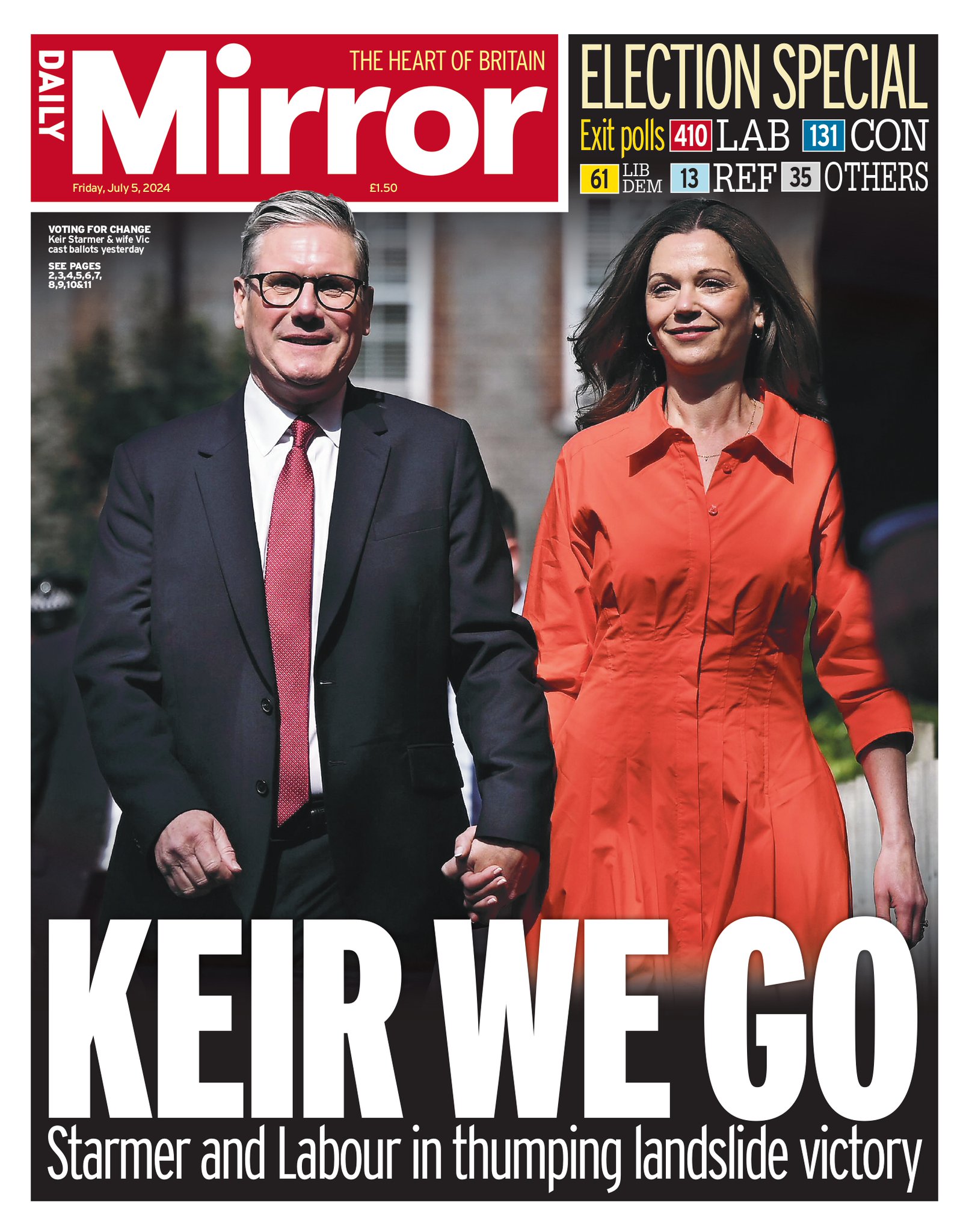
SOURCE A: MIRROR COVER:
https://pbs.twimg.com/media/GRrGdi6bMAA5Rxk.jpg:large
SOURCE B: EXPRESS ARTICLE
https://www.express.co.uk/news/politics/1919279/general-election-keir-starmer-labour-landslide
TITLE
How far have media conventions been used to construct viewpoints and ideologies in Sources A and B?
In your answer you must:
IMAGE AND ANCHORING TEXT - SOURCE A - PARAGRAPH FORMAT
1st – Establish the conventions that are being
used/challenged
A convention of tabloid newspapers is the selection of highly
emotive/sensational images that reinforce the ideological position of the
newspaper while also helping to reinforce the storefront nature of the front
page by accompanying a variety of different stories.
2nd – Describe the Source with relation to the conventions
– Does it use them? Or break them?
The use of image in source A, challenges one convention by
entirely dominating the page, as the paper feature only a splash with no off
lead or teasers.
3rd – Explain how this is related to the
construction of viewpoints and ideologies.
This is done to construct the viewpoint that the general
election is such an important event that it should and does dominate the national
narrative to the exclusion of all other stories.
4th – Repeat 2nd with a different
detail – If it breaks one does it use another? Can you say something about the
anchoring text?
However, the selected image is conventional in the sense
that it is emotive and reflects the political bias of the newspaper. The layering
effect around Starmer’s head, the unity of the pose (holding hands) and bright
red dress as a dominant colour on the page, combine to encode the idea of triumph,
of possibility and of forward movement.
5th – Repeat 3rd – If you previously stressed
viewpoint try to point out ideology and vice versa.
Sources: General Election Covers
Front Pages 4th of July 2024 - Tomorrow's Papers Today!
https://www.tomorrowspapers.co.uk/uk-front-pages-5th-of-july-2024/
Source: UK Rioting Covers
Front Pages 5th of August 2024 - Tomorrow's Papers Today!
ANYTHING ELSE?
If you find a story from 2024 that you think is interesting, please either post a link in the comments or send the link out as an email to the group.
Source A Daily Mail Front Cover + Source B Daily Mirror Cover
How far have media conventions been used to construct viewpoints and ideologies in Sources A and B?
In your answer you must:
Tabloid newspaper front pages follow clear and recognisable conventions designed to grab attention quickly and appeal to a mass audience. They typically feature bold, dramatic headlines—often using puns, emotive language, or alliteration—to provoke an immediate emotional reaction. The layout is usually visually driven, with large, central images that often dominate the page and are chosen to be eye-catching, sometimes sensational or intrusive. Headlines are often short, punchy, and placed directly over or near the image to anchor its meaning. Stories tend to focus on celebrity, crime, scandal, or human interest rather than in-depth political reporting. The use of colour, uppercase text, and rhetorical language is common, along with minimal text on the front page to entice readers to buy the paper. Mainstream UK tabloids such as The Daily Mail or The Daily Mirror rely on these conventions to entertain as much as inform, reinforcing their populist tone and appeal.