- Explain how historical contexts have influenced individual producers within the newspaper industry. Refer to The Guardian/Guardian Online and The Daily Mail/Mail Online to support your answer. (This encourages students to explore how past events, traditions, or industry shifts have shaped journalists and editors.)
- How do historical contexts shape the way newspapers represent events, issues, and individuals? Refer to The Guardian/Guardian Online and The Daily Mail/Mail Online to support your answer. (This directs students to analyse how past social, economic, and media trends impact coverage of contemporary stories.)
- In what ways have historical contexts influenced the editorial values and ideological positions of newspapers? Refer to The Guardian/Guardian Online and The Daily Mail/Mail Online to support your answer. (This makes students think about how long-standing ideologies or past editorial decisions continue to shape reporting.)
- How have historical events and media traditions affected the relationship between newspapers and their audiences? Refer to The Guardian/Guardian Online and The Daily Mail/Mail Online to support your answer. (This encourages discussion of shifting reader demographics, evolving trust in journalism, and changes in media consumption habits.)
- To what extent has historical context shaped the overall tone and approach of newspaper reporting over time? Refer to The Guardian/Guardian Online and The Daily Mail/Mail Online to support your answer. (This asks students to track how journalistic styles and priorities have evolved due to historical shifts.)
BELOW IS A RESPONSE TO THE FOLLOWING QUESTION. LOOK CAREFULLY AT THE MENU OF DIFFERENT EXAMPLES. BREXIT SHOULD DEFINITELY BE PART OF YOUR LIST OF EXAMPLES, BUT PIC ONE OR TWO OTHERS.
NB: CHECK YOUR SOURCES CAREFULLY
How do historical contexts shape the way newspapers
represent events, issues, and individuals? Refer to The
Guardian/Guardian Online and The Daily Mail/Mail Online to
support your answer. (This directs students to analyse how past social,
economic, and media trends impact coverage of contemporary stories.)
Newspapers don't just report the news, they construct
narratives shaped by historical contexts, ideological traditions, and
long-standing editorial values. Both The Guardian and The Daily Mail have been
shaped by their historical foundations, and their coverage of key events, such
as:
- Brexit
- COVID-19 pandemic,
- the death of Queen Elizabeth II
- conflicts like the war in Afghanistan
reflects their ideological legacies.
Examining how these newspapers represent events, issues, and individuals within
these contexts reveals how historical influences continue to define British
press coverage.
YOUR RESPONSE SHOULD DEFINITELY INCLUDE THIS INTRODUCTION, BUT THEN SHOULD CHOOSE ANY TWO OF THE OTHER TWO PARAGRAPHS.
INTRODUCTION
Both The Guardian and The Daily Mail were founded in historical circumstances that inform their editorial
perspectives. The Guardian, established in 1821 was created in response to the
Peterloo Massacre and has traditionally supported liberal, progressive
politics, emphasising human rights, democracy, and social reform. In contrast,
The Daily Mail, founded in 1896 targeted Britain’s growing middle class, championing right-wing populism,
nationalism, and strong support for the British monarchy and military. These
historical leanings shape how both newspapers cover major events, often leading
to very different representations of the same issue, with The Guardian favouring liberal messaging and journalist integrity, and The Mail favouring a populist approach appealing to the values of their right-wing, middle class, readers.
BREXIT
One of the most historically significant events in
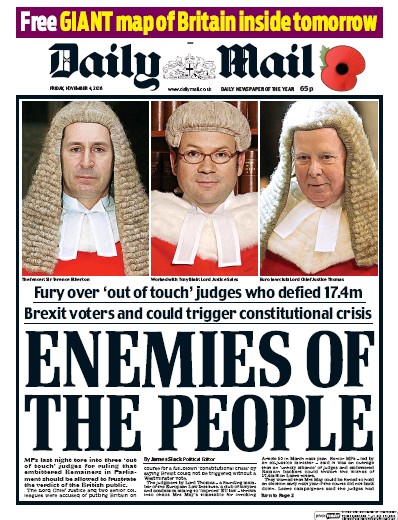
Britain’s modern press history is the reporting around Brexit. The Daily Mail’s infamous “Enemies of the People”
front page (4 November 2016) is a striking example of how newspapers draw on
historical narratives to shape public perception. By portraying the judges who
ruled that Parliament must vote on triggering Article 50 as threats to
democracy, The Daily Mail evoked a long-standing tradition in British
journalism of framing the judiciary as obstructing the "will of the
people." This reflects the paper’s populist,
right-leaning stance, but also echoes historical tensions between the press,
the courts, and democratic governance. It is also likely that the
incendiary language was not solely reflective of Daily Mail editor Paul
Dacre’s personal views but was designed to resonate with a right wing readership
historically inclined to distrust elite institutions. In contrast, The Guardian presented the same
ruling in a more measured manner, consistent with its historical tradition of
supporting constitutional checks and balances. Its front page on the same day
avoided inflammatory language, instead reporting the judges' decision as part of
due legal process. However, the inclusion of Polly Toynbee’s op-ed describing
Brexit as wreaking “havoc” illustrates how The Guardian, despite its
commitment to journalistic impartiality, has long aligned with progressive,
reformist viewpoints in times of constitutional crisis. The contrasting
coverage of the same event reflects how newspapers, shaped by their historical
legacies, construct narratives that resonate with their ideological traditions
and audience expectations.
DEATH OF THE QUEEN
The passing of Queen Elizabeth II in September 2022 was a moment of national significance, and the front pages of The Guardian and The Daily Mail offered strikingly different visual and editorial responses. The Daily Mail, known for its traditionalist and monarchist leanings, featured a nostalgic and patriotic front cover on September 9, 2022, with an image of the young Queen smiling playfully. This choice evoked a sense of national pride and sentimental reflection, aligning with the paper’s longstanding celebration of British heritage and monarchy. In contrast, The Guardian adopted a much more restrained approach. Its front page displayed only the dates of the Queen’s reign beneath a polysemic image of the newly crowned and enthroned queen, offering no anchoring text or explicit emotional framing. This minimalist design may have encouraged a more personal or ambiguous interpretation by its readership (whether reverent, critical, or neutral) reflecting The Guardian's broader commitment to journalistic objectivity and its more diverse, questioning stance toward the institution of monarchy. Additionally, The Guardian published articles
reflecting on Britain’s colonial past and how the Queen’s reign intersected
with decolonisation, an angle less likely to be explored by The Daily Mail,
given its historic alignment with British imperial nostalgia.
NB: BEWARE CHAT GPT - IT IS YOUR FRIEND BUT MAY ALSO BE A LIAR. LOOK BELOW AT THE TWO COVERS. WHAT WOULD YOU SAY?
COVID PANDEMIC
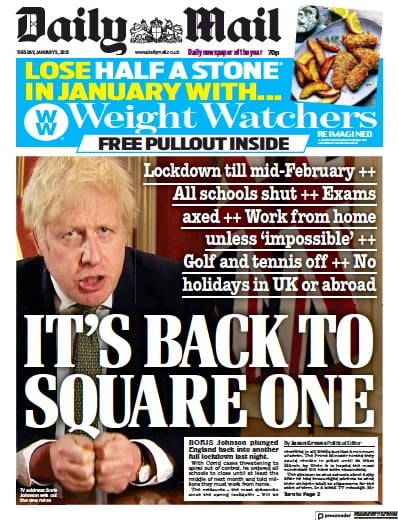
The COVID-19 pandemic was another event where historical contexts shaped newspaper representation, particularly in relation to government response and public trust. The Guardian, consistent with its tradition of holding power to account, critically examined the UK government's handling of the crisis. On April 1, 2020, it published an article titled "Virus patients more likely to die may have ventilators taken away," highlighting ethical concerns and resource shortages as outlined by the British Medical Association. Additionally, The Guardian extensively reported on the inequalities exposed by the pandemic, such as the disproportionate impact on ethnic minorities and working-class communities, aligning with its long-standing liberal news agenda. In contrast, The Daily Mail, traditionally supportive of Conservative governments, initially rallied behind Boris Johnson’s leadership. On March 24, 2020, its front page headline "Lockdown Britain" marked the announcement of nationwide restrictions, reinforcing a narrative of unity and resilience. However, on January 5, 2021, as Johnson announced a second lockdown, The Daily Mail selected an unflattering image of the Prime Minister and expressed concerns about the loss of freedoms, particularly affecting its middle-class readership. This shift in tone reflected the paper's populist approach, echoing the values and frustrations of its audience.
WAR IN AFGHANISTAN
Coverage of the conflict in Afghanistan, particularly during the fall of Kabul in 2021, further illustrates how historical contexts shape newspaper representation. The Guardian, with its legacy of critical reporting on military interventions, framed the withdrawal of Western forces as a failure of foreign policy. Its front page on August 17, 2021, carried the headline “Chaos in Kabul as thousands struggle to flee the Taliban,” focusing on the humanitarian crisis and the consequences for Afghan civilians. It also published critical analyses of how historical Western interventions, particularly the 2001 invasion, contributed to long-term instability in the region. In contrast, The Daily Mail, which has historically championed the British military and emphasized patriotism in wartime coverage, framed the withdrawal differently. On August 17, 2021, its front page headline “Biden: It's Afghans' own fault” highlighted criticism of U.S. President Joe Biden’s handling of the exit, emphasizing perceived leadership failures rather than offering a broader critique of military intervention. This aligns with The Daily Mail’s historical approach of supporting military engagement while focusing blame on political figures when conflicts end unsuccessfully.
Historical contexts profoundly shape how newspapers
represent events, issues, and individuals. The Guardian and The Daily Mail
maintain ideological positions rooted in their origins, affecting how they
frame major moments like Brexit, the COVID-19 pandemic, the death of Queen
Elizabeth II, and the Afghanistan conflict. While The Guardian tends to
emphasize progressive, investigative, and global perspectives, The Daily Mail
leans toward nationalism, traditionalism, and emotional engagement. These
differences, deeply rooted in historical contexts, continue to influence public
discourse and shape how readers interpret world events.