Compare the way that Source A and B use Media Language to construct values, attitudes and beliefs.
In your answer you must:
- consider how Media Language is used to construct media messages related to values, attitudes and beliefs
- make judgments and reach conclusions about how audiences might respond to these media messages
REMEMBER
NON COMMERCIAL (CHARITY) ADVERTSERS USE MED LANG TO
- Raise awareness of issues (relevant to charity/service)
- Build up brand image (promote positive associations in the minds of the public)
- Reassure existing supporters of the charity
- Persuade new supporters to donate
SOURCE A: SHELTER ADVERT

BUT WHERE WILL BE LIVE?
Losing your job doesn't have to mean losing your home. We can help.
Every year we help thousands of people avoid losing their homes.
Search 'Shelter House Advice' now.
HE CAN'T DO THAT
As a tenant it's hard to know where you stand. We can help.
Every year we help thousands of people with difficult or rogue landlords.
Search 'Shelter House Advice' now.
To donate text Home40 £5 to 70070.
I CAN'T FACE IT
Debt can seem too big to face, but if ignored can threaten your home. We can help.
Every year we help thousands of people avoid losing their homes because of debt or other problems.
Search 'Shelter House Advice' now.
To donate text Home40 £5 to 70070.
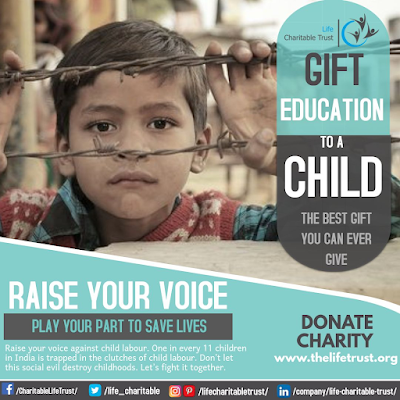
SOURCE B: THE LIFETRUST.ORG ADVERT

riley reynolds-
ReplyDeleteThe image in the shelter advert creates ideas from technical features. And example of this is the specific casting of the 3 individuals, the shelter advert have purposely casted 3 ethnically ambiguous people, to convey a message that this situation can happen to everyone and not just one ethnicity. This then therefor grabs our attention which is the cognitive stage in A.I.D.A, as we are curious to figure out why this is happening to various people. Another technical aspect that the shelter advert use is the translucent text over the peoples faces, which allows us to see their bland, and tired facial expression, this helps simplify the use of mis un scene as the shelter advert wants us as readers to sympathise for these people as they are weak and tired of what their going through, this then brings us to the last stage of A.I.D.A, which is action, we are at this stage of action, which is to donate and help these people in need as shelter have successfully used technical details to spike out attention and encourage us to help these people. Now for the image in the life trust advert, firstly out attention is grabbed by a young innocent boy trapped behind high maintenance barbed wire, this binary opposition of a little boy behind strong barbed wire instantly grabs our attention to realise the cruelty that child labour brings to society. Another technical detail is a specific graphic the advert has used, this graphic is a pill/tablet, containing a message of encouragement to donate, however the graphic in itself displays that the child is in danger and what they are go8ing through is like an illness and our donation is the medicine, this takes us to the action stage, and makes us as an audience what to change these problems as we highly sympathise for a young boy, proving the casting from the life trust advert was smart as readers usually feel that helping a child is just morally correct and no child should go through suffering. Lastly, both of these adverts boldly display an easy access to their website and indicators on how to donate, this technical features increases the chances of donations as it is an easy process to go through due to their advertising.
The shelter advert grabs our attention as we reach the cognitive stage, using an extreme closeup, as well as direct mode of address, allowing the audience see them as equals. The expressionistic lighting deadens their features, making them look tired and miserable. This sparks our interest, as we wonder what’s happened to them. The red, bold, translucent lettering also interests us, as we wonder what the rhetorical question: ‘But where will we live?’, and statements mean, as they have no context with the first look. The vignette creates a sense of claustrophobia, and we feel sympathy for these people. The unknown people they have chosen proves that anyone could be in this situation, and that people who are struggling should not feel embarrassed and should go to Shelter to get help, and people who feel morally responsible to help, should donate money. The Life Trust advert grabs our attention using a little boy’s cute face, as we are more likely to feel sympathy for him. The shallow depth of field blurs the background, allowing the audience to focus on the child. The barbed wire in front of his face interests us, as we wonder why he is behind this fence. Similarly, to the Shelter advert, the closeup, and direct mode of address allow us to connect to this child, which will make the audience want to donate. Differently, to the shelter advert, the pill graphic reinforces the message that lack of education is an illness, and we should do as much as we can to allow these children to have a happy childhood. The big lettering: ‘Gift education to a child’, catches our attention, and we desire to help this boy. The command makes us feel morally obliged to donate, as we understand that it’s the right thing to do.
ReplyDeleteMillie KellyThe Shelter advert and the Life Trust advert both convey that people should feel sympathy for people whether they are homeless or whether they do not have an education, and both adverts do this by encoding messaging in their image and text. The shelter advert, to begin with, uses direct mode of address, with the people featured in the advert looking directly at the audience creation an emotional and personal connection with the audience. The audience is also strategically placed to be eyeline matched with the subjects of the advert, encoding a sense of equality between the people and the audience. This could be done to grab the audience’s attention first and igniting the cognitive stage and capturing the audience’s attention to get them to feel sympathy for the homeless people and drive them to want to donate to the charity, in order to help shelter help the homeless people. Similarly, the Life Trust uses the symbolism of the barbed wire (Barthes) in their advert, to convey messages of children’s right to an education and driving people to feel sympathy for these children suffering against a “Social Evil”. The image of the child, who is also making direct address with the audience, captures the audience’s attention as barbed wire holds connotations of entrapment and evil, which people should not want to associate with children. Therefore, again the advert starts up the cognitive stage of awareness with the audience encouraging them to donate to their charity and encoding the message that it is your moral obligation to help the children, by donating to the life trust organisation.
ReplyDeleteKiera Malyn
ReplyDeleteIn both sources, direct mode of address is used to engage sympathy from the audience. It does this by drawing our attention to the eyes where are often referred to as the key to someone’s soul, showing us how that person is feeling. Also to do with the eyes, the shots are both eyeline matched, which instills a feeling of equality in the audience, therefore creating a sense of audience identification, and therefore engaging more sympathy from the audience. In source A, the photographer has taken extreme closeups of three ethnically ambiguous individuals, which draws our attention to only their faces and their expressions. The text on source A overlays the faces, which might connote a sense of entrapment, and alongside the extreme closeups, a sense of claustrophobia as well. In source B, the photographer has used shallow depth of field to draw our attention to the little boy in the foreground, rather than the environment around him. The focus of source B is the little boy and the barbed wire he is behind, connoting a similar sense of entrapment that he is stuck in child labour and it is up to us to save him.
Both adverts use their core images to engage with the Attention phase of the A.I.D.A. model by using direct mode of address to grab the attention of the audience. Both use eyeline matching to encode a message of either empathy or sympathy with the central figures in their adverts and to construct myths that naturalises their values and beliefs. For example, the audience is asked to empathise with the three faces on the Shelter Advert and to either imagine ourselves in their place (empathy) or to hope that we can help (sympathy). The social myth constructed is that anyone can be vulnerable and that all people deserve help and understanding if they are in a difficult situation. The casting helps to reinforce this idea by using ehtnically ambiguous models that cross a wide range of different ages. The lifetrust advert uses a young Indian model whose facial expression conveys a sense of sadness and yearning. This constructs the myth that it is a moral good to protect children and that we should not stand by when we see them in need. In both adverts, the image also constructs a message of imprisonment, the mise en scene of the box behind barbed wire makes this very clear and the extreme close ups shots of the three faces in the shelter advert also construct a claustrophobic reading. The myth in both cases is that imprisonment, either literal or figurative is bad, and by extension the moral obligation on the audience is to fight against this immoral situation. We can therefore see that applying Barthes allowes us to see the core value of the advertisements, encoding the belief that the audience has a responsiblity to aid those less fortunate.
ReplyDelete